• Request Info
  • Visit
  • Apply
  • Give
  • Request Info
  • Visit
  • Apply
  • Give

Search

  • A-Z Index
  • Map

Educational Leadership and Policy Studies

  • About
  • Our People
    • Our People Overview
    • Faculty
    • Staff
    • Students
  • Academic Programs
    • Academic Programs Overview
    • Adult & Continuing Education
    • Educational Administration
    • Evaluation Programs
    • Higher Education Administration
    • Undergraduate Studies
    • Student Affairs and Higher Education (Pending CRC Approval)
  • Education Research & Opportunity Center
  • Admissions & Information
    • Admissions Overview
    • Graduate Forms, Handbooks, and Resources
    • Contact ELPS
  • About
  • Our People
    • Our People Overview
    • Faculty
    • Staff
    • Students
  • Academic Programs
    • Academic Programs Overview
    • Adult & Continuing Education
    • Educational Administration
    • Evaluation Programs
    • Higher Education Administration
    • Undergraduate Studies
    • Student Affairs and Higher Education (Pending CRC Approval)
  • Education Research & Opportunity Center
  • Admissions & Information
    • Admissions Overview
    • Graduate Forms, Handbooks, and Resources
    • Contact ELPS
Home » News » Page 2

Leadership Studies Program Holds 2024 Awards Ceremony Senior Toast

Leadership Studies Program Holds 2024 Awards Ceremony Senior Toast

Leadership Studies Program Holds 2024 Awards Ceremony Senior Toast

May 17, 2024 by Jonah Hall

Leadership Studies Program Holds 2024 Awards Ceremony Senior Toast

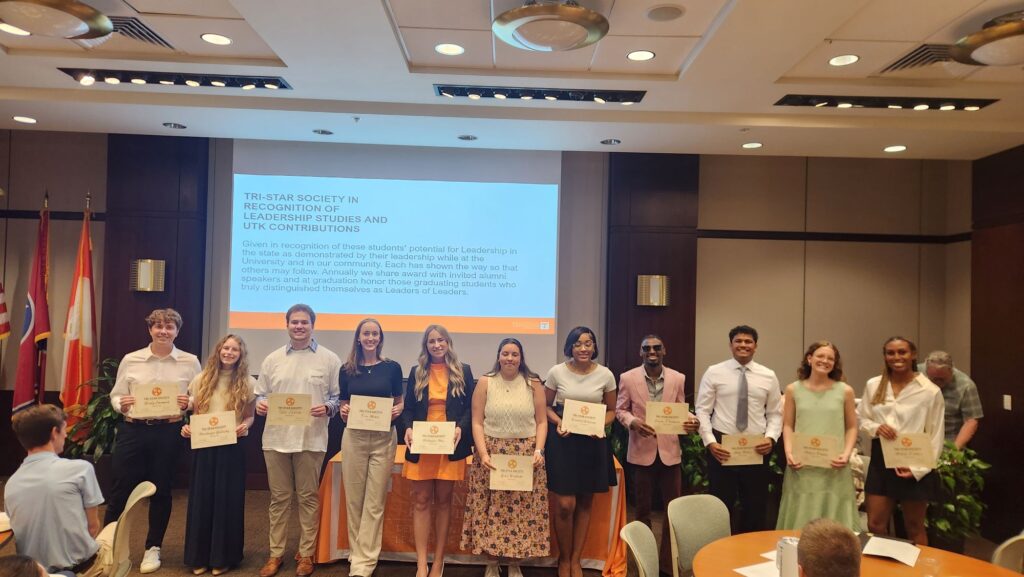
The Leadership Studies program held its Senior Toast and Awards Ceremony last night where we celebrated our forty-four (44) 2023-24 graduates. Annually, our graduates lead a Capstone project as their culminating experience in the minor, with the most exceptional being awarded a medal. We selected Tyler Johnson’s project “Addressing the Mental Health of IFC” and Amara Pappas’ “Musical Theatre Rehearsal Project and Major” as this cohort’s Self-Directed and Faculty-Initiated Capstones of the Year. Elle Caldow’s, Kyle Stork’s Margaret Priest’s, Devon Thompson’s, Jane Carson Wade’s exceptional Capstones also earned Honorable Mentions. Erin McKee earned her Leadership Studies Engaged Community Scholar Medal and Grace Woodside the Zanoni Award for contribution to the Leadership Studies Academic Community. We also recognized Dr. Sean Basso as our Faculty Member of the Year and ELPS’ own Diamond Leonard as our Staff Member of the Year.

The highlight of the evening is the induction of graduates, faculty, and staff to the Tri-Star Society. The 2024 Class of the Tri-Star Society is: Brody Carmack, Mackenzie Galloway, Tyler Johnson, Erin Mckee, Alay Mistry, McKaylee Mix, Amara Pappas, Devon Thompson, Mikele Vickers, Kendall William, and Grace Woodside. These leaders truly distinguished themselves as Leaders of Leaders with exceptional potential for continued leadership within our state, as demonstrated by their time at the University and in our community. Undergraduate Leadership Studies celebrates each of our graduates, all they have and will accomplish, and those in the UT community that contributed to their success.

Filed Under: News

Supporting Early Childhood Teacher Growth and Development with Actionable Context-Based Feedback

Supporting Early Childhood Teacher Growth and Development with Actionable Context-Based Feedback

May 17, 2024 by Jonah Hall

Supporting Early Childhood Teacher Growth and Development with Actionable Context-Based Feedback

By Dr. Mary Lynne Derrington & Dr. Alyson Lavigne

Please Note: This is the final part of a four-part series on actionable feedback. Stay tuned for the next posts that will focus on Leadership Content Knowledge (LCK) and teacher feedback in the areas of STEM, Literacy, and Early Childhood Education.

Missed the beginning of the series? Click here to read Part 1
on making teacher feedback count!

According to the Center on the Developing Child at Harvard University, in the first few years of life more than 1 million new neural connections form every second. With children experiencing rapid brain development from birth to age 8, early childhood education and the experiences in those settings are critical for building a foundation of lifelong learning and success. Thus, supporting the educators who teach these early learners is perhaps one of the best educational investments that any school leader can make. 

One way leaders support teachers is to observe classrooms and provide feedback. Maria Boeke Mongillo and Kristine Reed Woleck argue that those who observe and provide feedback to early childhood educators can leverage leadership content knowledge—knowledge about the principles of early childhood education—and apply that knowledge to the observation cycle and the context in which early childhood educators work.

To apply leadership content knowledge, school leaders should first be familiar with the National Association for the Education of Young Children (NAEYC) and their principles of child development and learning, most recently published in 2020. The list of nine principles includes the essential element of play for promoting joyful learning to foster self-regulation, language, cognitive and social competencies, and content knowledge across disciplines.

Once a school leader is familiar with NAEYC’s nine principles, they may consider applying early childhood-informed “look-fors” during an observation with related questions that can be used during a pre- or post-observation conference. Examples by area of teaching are provided below.

Learning Environment

Look-Fors

  • Flexible seating and work spaces allow for collaboration and social skills and language development
  • Physical space and furniture allow for movement and motor breaks

Pre- or Post-Observation Questions

  • How do your classroom environment and materials support your student learning outcomes?
Instructional Practices

Look-Fors

  • Opportunities for learning and embedded in play and collaborative experiences

Pre- or Post-Observation Questions

  • How might your students consolidate and extend their learning in this lesson through play opportunities?
Assessment

Look-Fors

  • Use of observations and interviews to assess student learning.

Pre- or Post-Observation Questions

  • What methods are you using to collect information about student learning during this lesson?

These systematic structures can be applied to make sure that observation and importantly, feedback to early childhood educators is meaningful and relevant. 

This blog entry is the last entry as part of a four-part series on actionable feedback. 

If this blog has sparked your interest and you want to learn more, check out our book, Actionable Feedback to PK-12 Teachers. And for other suggestions on supervising teachers in early childhood, see Chapter 10 by Maria Boeke Mongillo and Kristine Reed Woleck.

Missed the beginning of the series? Click here to read the first, second and third blog posts. 

Filed Under: News

Brian Mells Recognized as Field Award Recipient

Brian Mells Recognized as Field Award Recipient

March 25, 2024 by Jonah Hall

Brian Mells Recognized as Field Award Recipient

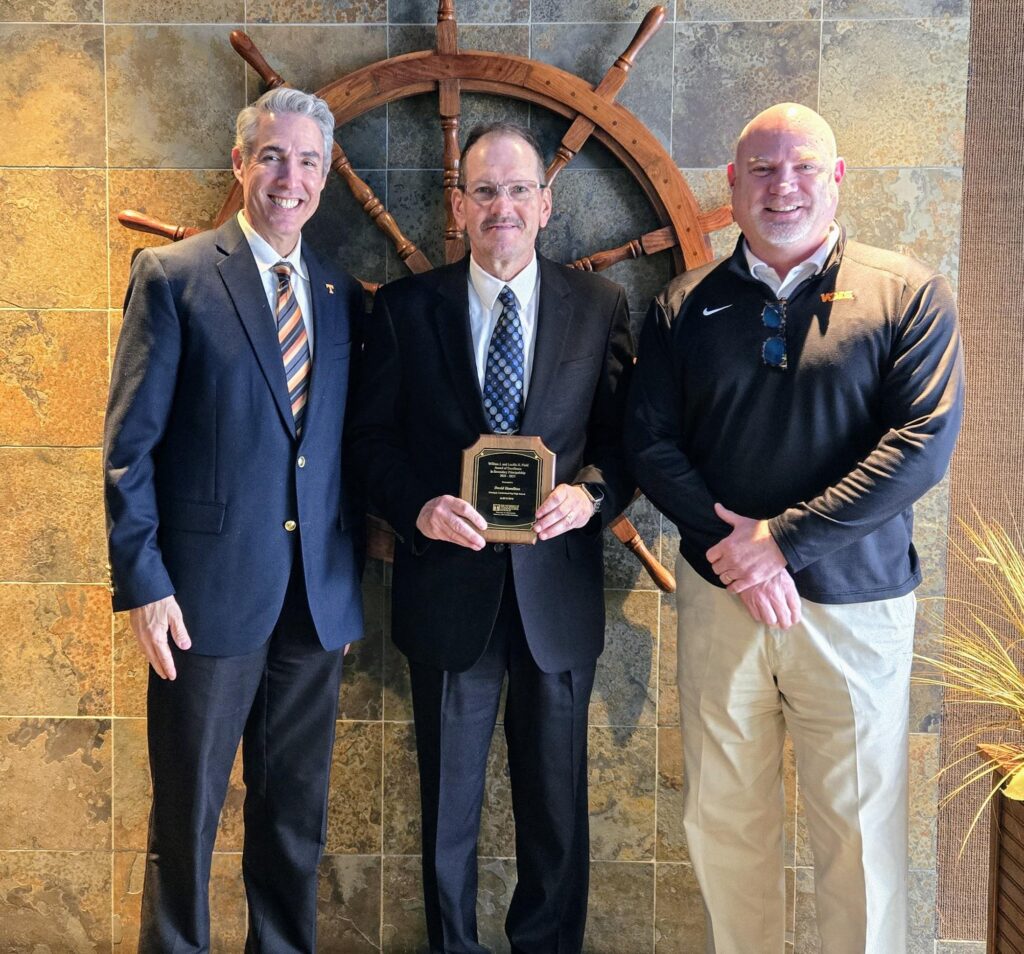
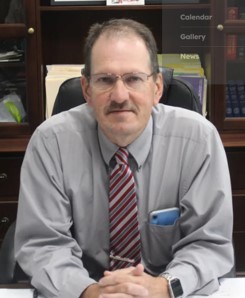
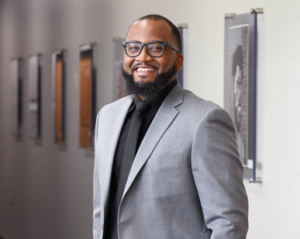
Dr. Brian Mells, Principal at Whites Creek High School in Metro Nashville Public Schools named as recipient of William J. and Lucille H. Field Award for Excellence in Secondary Principalship for the State of Tennessee.

The Field Award was established to recognize one outstanding secondary school leader each year who demonstrates leadership excellence through commitment to the values of civility, candor, courage, social justice, responsibility, compassion, community, persistence, service, and excellence. Administered by the College of Education, Health, and Human Sciences at the University of Tennessee, the Field Award identifies a Tennessee secondary school principal whose life and work are characterized by leadership excellence and encourages secondary school principals to pause and reflect upon their current leadership practice and to consider their experience, challenges, and opportunities in light of the personal values that they embody. 


The Field Award recipient for this year is Dr. Brian Mells. Principal of Whites Creek High School in Metro Nashville Public Schools. A secondary principal since 2016, Dr. Mells holds a Bachelor’s degree from The University of Tennessee, a Master’s from Tevecca Nazarene University, an EdS and an EdD from Carson-Newman University.  During Dr. Mellls’ tenure at Whites Creek High School, he has led his campus to excellence by supporting academic rigor and student achievement, and by strengthening positive relationships with all stakeholders. Dr. Mells is an exceptional school leader who has taken the initiative to implement numerous programs on his campus, inspire instructional innovation, and improve student achievement. Dr. Mells stated that his “core belief of [his] leadership is that all students can achieve and grow academically, socially, and emotionally, when the appropriate systems and structures are in place for them to be successful. 

Dr. Mells is an innovative school leader who is passionate about developing collective efficacy and collective accountability among his faculty and staff to ensure that they achieve excellence for all stakeholders. Under Dr. Mells’ leadership, Whites Creek High School was able to increase all academic achievement outcomes for all students and earn an overall composite TVAAS of Level 5 for the first time in school history and has maintained that status for the past two years. Dr. Mells was nominated for the Field Award by MNPS superintendent, Adrienne Battle and endorsed by the Chief of Innovation, Renita Perry. Perry commented, “Dr. Mells is an innovative school leader who is passionate about developing collective efficacy and collective accountability among his faculty and staff to ensure that they achieve excellence for all stakeholders.” The department of Educational Leadership and Policy Studies at the University of Tennessee is proud to name Dr. Mells as this year’s Field Award Winner. Congratulations, Dr. Brian Mells! 

Filed Under: News

Supporting Literacy Teachers with Actionable Content-Based Feedback

Supporting Literacy Teachers with Actionable Content-Based Feedback

February 6, 2024 by Jonah Hall

Supporting Literacy Teachers with Actionable Content-Based Feedback

By Dr. Mary Lynne Derrington & Dr. Alyson Lavigne 

Please Note: This is Part 3 of a four-part series on actionable feedback. Stay tuned for the next posts that will focus on Leadership Content Knowledge (LCK) and teacher feedback in the areas of STEM, Literacy, and Early Childhood Education.

Missed the beginning of the series? Click here to read Part 1
on making teacher feedback count!

A strong literacy foundation in students’ early years is critical for success in their later ones. School leadership plays a significant part in establishing this foundation by equipping teachers with the right professional development.

Many (but not all) school leaders are versed in effective literacy instruction. Given its foundational importance, it is wise for principals — and others who observe and mentor teachers — to leverage the key elements of effective literacy instruction in the observation cycle. In this blog post, we outline two ways to do so.

Jan Dole, Parker Fawson, and Ray Reutzel suggest that one way to use research-based supervision and feedback practices in literacy instruction is to include in the observation cycle tools, guides, and checklists that specifically focus on literacy instruction, such as:

  • The Protocol for Language Arts Teaching Observations (PLATO; Grossman, 2013)
  • The Institute of Education Sciences’ (IES) K-3 School Leader’s Literacy Walkthrough Guide (Kosanovich et al., 2015)
  • The Institute of Education Sciences’ (IES): Grades 4-12 School Leaders Literacy Walkthrough Guide (Lee et al., 2020)

These tools highlight key concepts or what can be called “look-fors” of literacy rich environments by using a rubric or checklist. Some examples follow:

  • Strategy Use and Instruction: The teacher’s ability to teach strategies and skills that supports students in reading, writing, speaking, listening, and engaging with literature (PLATO)
  • Literacy Texts: Retell familiar stories, including key details (IES K-3; Kosanovich et al., 2015)
  • Vocabulary and Advanced Word Study: Explicit instruction is provided in using context clues to help students become independent vocabulary learners using literary and content area text (IES 4-12; Lee et al., 2020)

A second way is to develop professional learning communities (PLCs) to extend literacy supervision and feedback. Successful literacy-focused PLCs:

  • Establish a shared literacy mission, vision, values, and goals,
  • engage in regular collective inquiry on evidence-based literacy practices, and
  • promote continuous literacy instruction improvement among staff.

These strategies can be used by school leaders or complement the work of a school literacy coach. Ready to create a learning community in your school or district? Read KickUp’s tips for setting PLCs up for success.

This blog entry is part of a four-part series on actionable feedback. Stay tuned for our next post that will focus on concrete ways to provide feedback to Early Childhood Education teachers.

If this blog has sparked your interest and you want to learn more, check out our book, Actionable Feedback to PK-12 Teachers. And for other suggestions on supervising teachers in literacy, see Chapter 9 by Janice A. Dole, Parker C. Fawson, and D. Ray Reutzel.

Filed Under: News

Dueñas Highlighted as a 2024 Emerging Scholar by Diverse Issues in Higher Education

Dueñas Highlighted as a 2024 Emerging Scholar by Diverse Issues in Higher Education

January 31, 2024 by Jonah Hall

Dueñas Highlighted as a 2024 Emerging Scholar by Diverse Issues in Higher Education

Courtesy of the College of Education, Health, and Human Sciences

Mary Dueñas is passionate about student success, especially among underrepresented and marginalized student populations. Because of her passion for students to thrive in a higher education environment, she dedicates a large portion of her scholarship research to examine equity and access issues in higher education.

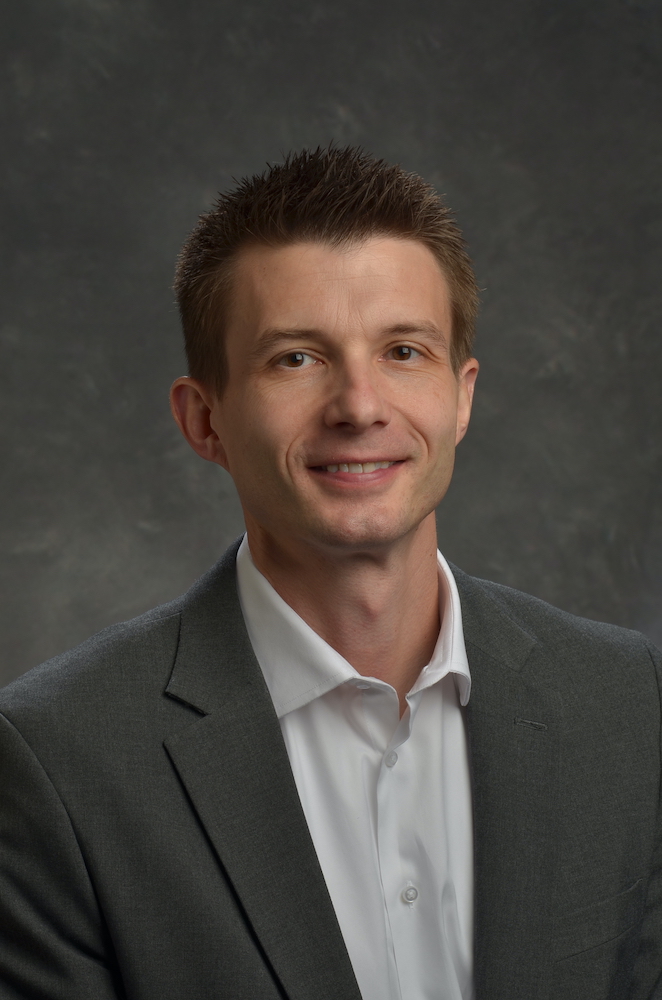
Mary Dueñas

Mary Dueñas

Her work hasn’t gone unnoticed. Just recently, Diverse Issues in Higher Education named Dueñas “An Equity and Access Champion” in their January 18th, 2024, issue and has named her a Top 15 Emergent Scholar. The publication highlights emerging scholars making an impact on education on college campuses nationwide.

“Receiving this national recognition is wonderful, and I’m honored to share this platform with other outstanding scholars from different disciplines,” said Dueñas.

Dueñas is an assistant professor in the department of Educational Leadership and Policy Studies (ELPS) at the University of Tennessee, Knoxville, College of Education, Health, and Human Sciences (CEHHS). In addition, she serves as program coordinator for the master’s student personnel program in College Student Personnel (CSP).

Using both quantative and qualitative research methods, Dueñas focuses on Latina/o/x/e  college students’ sense of belonging and their experience with imposter syndrome. She uses holistic frameworks and critical theory to share stories and explain systemic inequities that marginalized communities face in higher education.

“My research examines the ways in which larger social processes affect students and their overall well-being while also addressing underrepresented and marginalized students in relation to retention and success,” said Dueñas.

Cristobal Salinas, Jr., an associate professor of educational leadership and research methodology at Florida Atlantic University, nominated her for this prestigious national recognition. In his nomination letter, Salinas commended Dueñas for her commitment to scholarship that pushes the boundaries of higher education through novel perspectives and an innovative approach to research.

“This commitment to pioneering scholarship has been complemented by her unwavering dedication to teaching and mentoring the next generation of scholars, which is an integral part of her academic mission, explains Salinas.

Despite having a full plate at CEHHS, Dueñas has authored several peer-reviewed journal articles, been a guest on a podcast, and has several works she is authoring or co-authoring under review. One is “Síndrome del impostor: The Impact of the COVID-19 Pandemic on Latinx College Students’ Experiences with Imposter Syndrome.” She is co-authoring “Culturally Responsive Mentoring: A Psychosociocultural Perspective on Sustaining Students of Color Career Aspirations in STEM”.

Dueñas takes a glass-half-full approach to her work, focusing on the whole student. In other words, she says it’s about the positives that make a student’s experience successful and asking questions about what works.

“There is a changing landscape in how we think about higher education,” Dueñas says. “It’s not so much about the students adapting to higher education, it’s more about how higher education institutions supporting and serving students.”

Filed Under: News

Supporting STEM Teachers with Actionable Content-Based Feedback

Supporting STEM Teachers with Actionable Content-Based Feedback

January 25, 2024 by Jonah Hall

Supporting STEM Teachers with Actionable Content-Based Feedback

By Dr. Mary Lynne Derrington & Dr. Alyson Lavigne 

Please Note: This is Part 2 of a four-part series on actionable feedback. Stay tuned for the next posts that will focus on Leadership Content Knowledge (LCK) and teacher feedback in the areas of STEM, Literacy, and Early Childhood Education.

Missed the beginning of the series? Click here to read Part 1
on making teacher feedback count!

For school leaders, providing teachers with feedback in unfamiliar subject areas can be a challenge. At the same time, we know that teachers highly value feedback on their teaching content area as well as general pedagogical practices. When school leaders deepen their understanding of different subjects, it can prove a powerful lever to giving teachers the feedback they deserve and desire. Today, we’ll discuss ways to support teachers in the STEM (Science, Technology, Engineering and Math) area.

Imagine you are scheduled to observe a STEM lesson, an area where you might not feel confident. What might be some ways to prepare for this observation? Sarah Quebec Fuentes, Jo Beth Jimerson, and Mark Bloom recommend post-holing. In the context of building, this refers to digging holes deep enough to anchor fenceposts. As it pertains to your work, post-holing means engaging in an in-depth, but targeted exploration of the content area.

Another strategy is joining a STEM instructional coach or specialist for an observation and debrief. A third way to learn is to attend a STEM-focused professional development for teachers. These activities can help you think more deeply about the content and how it is taught.

In addition, you can identify subject-specific best practices to integrate into a pre-observation or post-observation conversation. This might look like adapting a subset of evaluation questions to specifically reflect STEM objectives. For example:

  1. Poses scenarios or identifies a problem that students can investigate (Bybee, et al., 2006).
  2. Fosters “an academically safe classroom [that] honors the individual as a mathematician and welcomes him or her into the social ecosystem of math” (Krall, 2018).
  3. Avoids imprecise language and overgeneralized tips or tricks (e.g., carry, borrow, FOIL) and instead use precise mathematical language grounded in conceptual mathematical understanding (e.g., trade, regroup, distributive property) (Karp et al., 2014, 2015).
  4. Uses models to communicate complex scientific concepts, emphasizing that models are only approximations of the actual phenomena and are limited simplifications used to explain them (Krajcik & Merritt, 2013).

Let’s imagine a meaningful mathematical talk emerges as an important practice from your post-holing in mathematics. In a pre-observation you might ask the teacher about their plans for creating meaningful mathematical talk in the lesson. During the observation, you can note if those questions appeared and/or when moments of meaningful mathematical talk were taking place. In a post-observation, you might ask teachers to reflect upon the moments they felt meaningful mathematical talk was occurring, and what inputs yielded those outcomes.

This blog entry is part of a four-part series on actionable feedback. Stay tuned for our next two posts that will focus on Leadership Content Knowledge (LCK) on concrete ways to provide feedback to teachers in the areas of, and Early Childhood Education.

If this blog has sparked your interest and you want to learn more, check out our book, Actionable Feedback to PK-12 Teachers. And for other suggestions on supervising teachers in STEM discipline areas with specific pre-observation and post-observation prompts and key practices for observation, see Chapter 8 by Sarah Quebec Fuentes, Jo Beth Jimerson, and Mark A. Bloom.

Filed Under: News

Kelchen Once Again Named Top Scholar Influencer

Kelchen Once Again Named Top Scholar Influencer

January 4, 2024 by Jonah Hall

Kelchen Once Again Named Top Scholar Influencer

Courtesy of the College of Education, Health, and Human Sciences (January 4, 2024)

We’ve all heard the term, “influencer.” Many of us associate an influencer as someone with a large following on social media, such as Instagram or YouTube, who set trends or promotes products. But did you know that there are a select group of scholar influencers who help shape educational practice and policy?

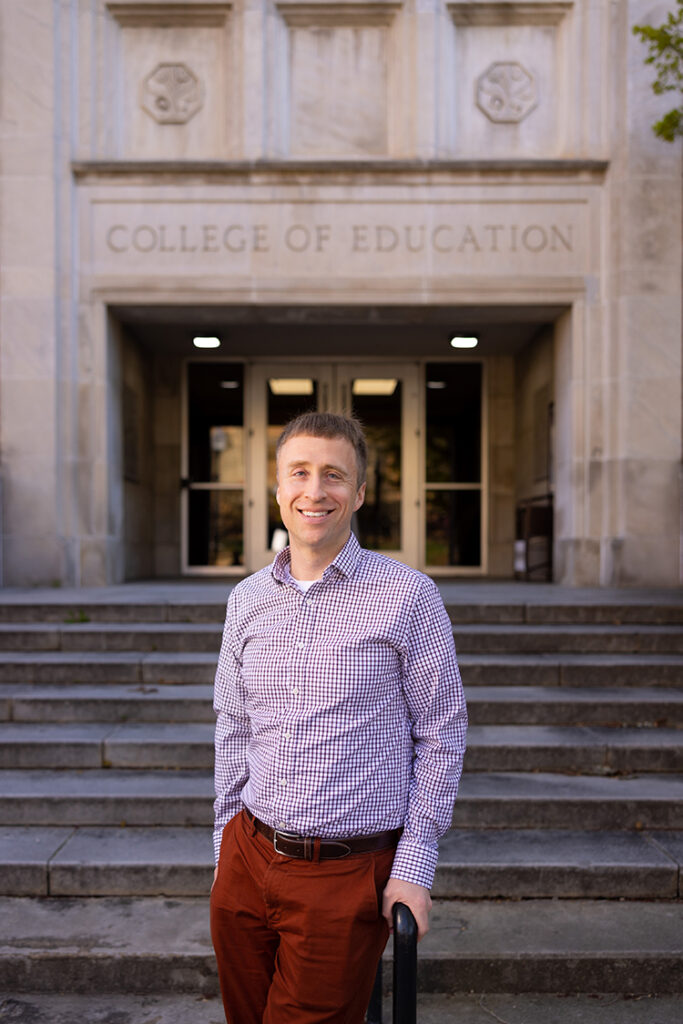
Robert Kelchen stands in front of the

Robert Kelchen

One of those scholar influencers is Robert Kelchen, who serves as department head of Educational Leadership and Policy Studies (ELPS) at the University of Tennessee, Knoxville, College of Education, Health, and Human Sciences (CEEHHS).  Kelchen is ranked 41 out of 20,000 scholars nationwide in Education Week’s Edu-Scholar Public Influence Rankings for 2024. In fact, Kelchen is the only scholar from the University of Tennessee, Knoxville, to make the list.

“As a faculty member at a land-grant university, it is my job to help share knowledge well beyond the classroom or traditional academic journals,” said Kelchen. I am thrilled to have the opportunity to work with policymakers, journalists, and college leaders on a regular basis to help improve higher education.”

For 14 years, Education Week selects the top-200 scholars (out of an eligible pool of 20,000) from across the United States as having the most influence on issues and policy in education. The list is compiled by opinion columnist Rick Hess, resident scholar at the American Enterprise Institute and director of Education Policy Studies.

The selection process  includes a 38-member Selection Committee made up of university scholars representing public and private institutions from across the United States. The Selection Committee calculates scores including, Google Scholar Scores, Book Points, Amazon Rankings, Congressional Record mentions, media, and web appearances and then ranks the scholar accordingly.  Kelchen is considered a “go-to” source for reporters covering issues in higher education, with over 200 media interviews, year after year. If there is a story about higher education in the media, you’ll more than likely find a quote from Kelchen as an expert source.

“In the last year, I have had the pleasure of supporting several states on their higher education funding models, presenting to groups of legislators, and being a resource to reporters diving into complex higher education finance topics. These engagements help strengthen my own research and give me the opportunity to teach cutting-edge classes to ELPS students,” said Kelchen.

In addition, Kelchen received national recognition by the Association for the Study of Higher Education (ASHE) for his research on higher education finance, accountability policies and practices, and student financial aid. ASHE’s Council on Public Policy in Higher Education selected Kelchen for its Excellence in Public Policy Higher Education Award.

Through its eight departments and 12 centers, the UT Knoxville College of Education, Health, and Human Sciences enhances the quality of life for all through research, outreach, and practice. Find out more at cehhs.utk.edu

Filed Under: News

Make Your Feedback to Teachers Matter: Leadership Content Knowledge is Key

Make Your Feedback to Teachers Matter: Leadership Content Knowledge is Key

December 12, 2023 by Jonah Hall

Make Your Feedback to Teachers Matter: Leadership Content Knowledge is Key

By Dr. Mary Lynne Derrington & Dr. Alyson Lavigne 

Please Note: This is Part 1 of a four-part series on actionable feedback. Stay tuned for the next posts that will focus on Leadership Content Knowledge (LCK) and teacher feedback in the areas of STEM, Literacy, and Early Childhood Education.

The most important job of a school leader is to focus on the central purpose of schools—teaching and learning. Feedback to teachers on how to improve instructional practice is a critical element in promoting school success.

On average, principals spend 9 hours a week observing, providing feedback, and discussing instruction with teachers. Including documentation, this equates to nearly six 40-hour work-weeks and as much as 25% of a principal’s time.

Besides the time principals spend in these tasks, they are costly. It costs $700 million a year to observe all 3.1 million K-12 public school teachers just twice a year. All these efforts are based on the belief that, when school leaders observe teachers, they provide teachers with meaningful feedback — and that feedback, in turn, improves teaching and learning.

So, how does a school leader ensure that their feedback impacts practice? Feedback only matters when it can be acted upon, so what makes feedback actionable? We can all agree that for feedback to be actionable it must be timely, concrete, and clear. But it must also relate to the task at hand—teaching subject matter content.

When researchers ask teachers about the feedback they receive from school leaders, half of teachers reported that the feedback received from principals is not useful. Teachers say that they rarely receive feedback about their teaching content. Yet we know that pedagogical content knowledge is important for effective teaching and for student learning.

If you want to make your feedback to teachers matter, emphasize a teacher’s curriculum subject matter content as a part of your feedback. This requires differentiation for each teacher by subject matter and context of the classroom. Differentiation personalizes the feedback and emphasizes that the subject, content, and context of the classroom matters.

How can school leaders meet this lofty goal and possess expertise in every content area? First, a strong background in effective teaching practices is an important start. Second, leaders need a deep content knowledge of the subject and how it is learned (by students), and how it is taught, sometimes referred to as post-holing.

Principals can gain content expertise in many ways. For example:

  • Work with a content PLC team
  • Learn the standards for the subject
  • Review discipline-specific best practice research
  • Attend a subject-specific conference

Post-holing provides a great opportunity to align with other activities that might be occurring in the school, and demonstrates that you care about the subject matter and the teacher by providing deeper differentiated feedback. Challenge yourself to tackle one subject matter each year.

This blog entry is part of a four-part series on actionable feedback. Stay tuned for our next three posts that will focus on Leadership Content Knowledge (LCK) on concrete ways to provide feedback to teachers in the areas of STEM, Literacy, and Early Childhood Education.

If you want to dig into this content (pun intended!) a bit more, check out our book, Actionable Feedback to PK-12 Teachers. And for other suggestions on differentiated feedback, see Chapter 3 by Ellie Drago-Severson and Jessica Bloom-DeStefano.

Filed Under: News

Martinez Coaching Ugandan Olympian in 2024 Paris Games

Martinez Coaching Ugandan Olympian in 2024 Paris Games

November 10, 2023 by Jonah Hall

Martinez Coaching Ugandan Olympian in 2024 Paris Games

Kathleen Noble, a 2020 Olympic singles rower from Uganda, is being coached by Dr. James Martinez, an assistant professor in the Department of Educational Leadership & Policy Studies (ELPS). Dr. Martinez, himself a 5-time U.S. National and Olympic team member between 1993-1998, began working with Mrs. Noble this past July after she moved to Knoxville with her husband, Nico.

“Kathleen is an exceptionally competitive athlete, and an even better person,” says Dr. Martinez. A 28-year-old graduate of Princeton University, Mrs. Noble was an internationally competitive youth swimmer, having competed at the 2012 Short-Course World Championships in Istanbul. Holder of many Ugandan national records in freestyle and butterfly events, she started rowing as a walk–on athlete in her sophomore year of college and ultimately competed at the 2019 Under-23 World Rowing Championships.

Competing for Uganda in the 2020 Olympics (held in 2021 due to COVID), Mrs. Noble is the first rower ever to compete for her country. “Kathleen is a world-class athlete in every sense of the word,” says Martinez. “Her passion to understand every aspect of the sport, from racing, to nutrition, to training, to rigging the boat is inspiring.” Dr. Martinez and Mrs. Noble recently returned from the African Olympic Qualification Regatta in Tunisia, where she placed fourth among fifteen woman single scullers, qualifying her for the Paris games.

Dr. Martinez balances his UTK research (focused on school administrator self-efficacy), teaching and service demands and family responsibilities while supervising Mrs. Noble’s preparation for the Olympics. “Days are pretty full,” he says, “but no more so than when I was a schoolteacher and in training myself while raising our young children back in the day.”

Dr. Martinez credits his wife, Elizabeth, who earned her Master’s degree from the University of Tennessee, Knoxville’s School of Landscape Architecture, for her incredible support.. “She’s the glue that holds it all together,” he says.

Filed Under: News

Introducing UTK ERO: Your Bridge to Education Excellence

Introducing UTK ERO: Your Bridge to Education Excellence

October 24, 2023 by Jonah Hall

Introducing UTK ERO: Your Bridge to Education Excellence

By Karina Beltran

The Educational Leadership and Policy Studies Department (ELPS) within the College of Education, Health, and Human Sciences (CEHHS) is proud to announce the launch of the Education Research & Opportunity Center (UTK ERO). UTK ERO represents the merger of The Center for Education Leadership, The Postsecondary Education Research Center, and the College Access and Persistence Services Outreach Center. UTK ERO builds on the long tradition of excellence established by these prior CEHSS efforts with a renewed passion and enhanced capacity for producing high-quality research, delivering high-impact outreach, and improving policy and practice in education. 

The mission of UTK ERO is to produce high-quality research, conduct high-impact outreach, and promote effective policies and practices that increase educational success and opportunity. 

High Quality Research  

Our research spans the entire education spectrum, from early childhood to adult education, addressing critical issues in education policy and practice. At UTK ERO, we hold our research to the highest standards, making sure it is: 

  1. Relevant: We understand the importance of timely, pertinent research. Our work focuses on critical educational issues, and we strive to deliver research that matters when it’s needed most.
  2. Rigorous: Trust is paramount. All our research undergoes a rigorous internal and external review process to ensure methodological soundness, responsible data management, and freedom from errors or biases.
  3. Actionable: We bridge the gap between academic concepts and real-world impact by providing concrete action steps for policymakers, school leaders, and educators.
  4. Accessible: We believe in making knowledge accessible to all. Our research findings are disseminated through a variety of channels, including social media, website blog posts, podcasts, and practitioner-oriented venues. We present results in graphical, text, audio, and video formats.

High Impact Outreach  

As a land-grant university, the University of Tennessee takes pride in enhancing economic, social, and professional opportunities for all Tennesseans. UTK ERO manages five U.S. Department of Education TRiO outreach and student services programs, all designed to increase college access and success for first-generation, low-income students in East Tennessee and surrounding rural areas.  

Our outreach programs are guided by these core values: 

  1. Service: Our main priority and passion are to increase access to and success within postsecondary education for students from disadvantaged and historically underrepresented groups. Every student, every opportunity.
  2. Stewardship: We are committed to managing public resources and funds with the utmost responsibility, transparency, and fiscal integrity. We aim to create a safe, positive, and fair environment for our employees and the students we serve.
  3. Community: Our connection with the communities we serve is central to our success. We value engagement with and support of these communities, maintaining regular and effective contact with our project partners to provide comprehensive, community-specific support for students and communities.

Stay Connected 

For more information, please visit the UTK ERO website at ero.utk.edu. There you can follow UTK ERO on social media, receive news and updates related to our research and outreach, and follow our blog!  

Website: ero.utk.edu 

Social Media Platforms 

Instagram: https://www.instagram.com/utk_ero/ 

Meta: https://www.facebook.com/people/The-Education-Research-Opportunity-Center/100090028087658/ 

LinkedIn: https://www.linkedin.com/company/education-research-and-opportunity-center/about/ 

X: https://twitter.com/utk_ero  

Filed Under: News

  • « Previous Page
  • 1
  • 2
  • 3
  • 4
  • …
  • 7
  • Next Page »

Recent Posts

  • ACED Students & Faculty Attend 2025 AAACE Conference
  • Bartlett, McGuigan, & Miller Join ELPS this Fall as New Faculty Members
  • Morrow, Angelle, & Cervantes Recently Return from BELMAS
  • Serving with Purpose: Lessons Learned from Consulting in Assessment and Research
  • Navigating Ambiguity and Asymmetry: from Undergraduate to Graduate Student and Beyond

Recent Comments

No comments to show.

College of Arts & Sciences

117 Natalie L. Haslam Music Center
1741 Volunteer Blvd.
Knoxville TN 37996-2600

Phone: 865-974-3241

Archives

  • November 2025
  • August 2025
  • July 2025
  • June 2025
  • May 2025
  • March 2025
  • February 2025
  • January 2025
  • December 2024
  • November 2024
  • October 2024
  • September 2024
  • August 2024
  • July 2024
  • June 2024
  • May 2024
  • April 2024
  • March 2024
  • February 2024
  • January 2024
  • December 2023
  • November 2023
  • October 2023
  • May 2022
  • September 2021
  • August 2021
  • September 2020
  • August 2020
  • June 2020
  • May 2020
  • February 2020
  • November 2019
  • September 2019
  • August 2019
  • July 2019
  • June 2019
  • April 2019
  • March 2019
  • February 2019
  • January 2019
  • December 2018
  • November 2018
  • October 2018
  • August 2018
  • June 2018
  • May 2018
  • April 2018
  • February 2018
  • December 2017
  • October 2017
  • August 2017

Categories

  • Accolades
  • CEL
  • CSP
  • EDAM
  • Evaluation Methodology Blog
  • Graduate Spotlights
  • HEAM
  • Leadership Studies News
  • News
  • PERC
  • Presentations
  • Publications
  • Research
  • Uncategorized

Copyright © 2026 · UT Knoxville Genesis Child for CEHHS on Genesis Framework · WordPress · Log in

Educational Leadership and Policy Studies

325 Bailey Education Complex
Knoxville, Tennessee 37996

Phone: 865-974-2214
Fax: 865.974.6146

The University of Tennessee, Knoxville
Knoxville, Tennessee 37996
865-974-1000

The flagship campus of the University of Tennessee System and partner in the Tennessee Transfer Pathway.

ADA Privacy Safety Title IX