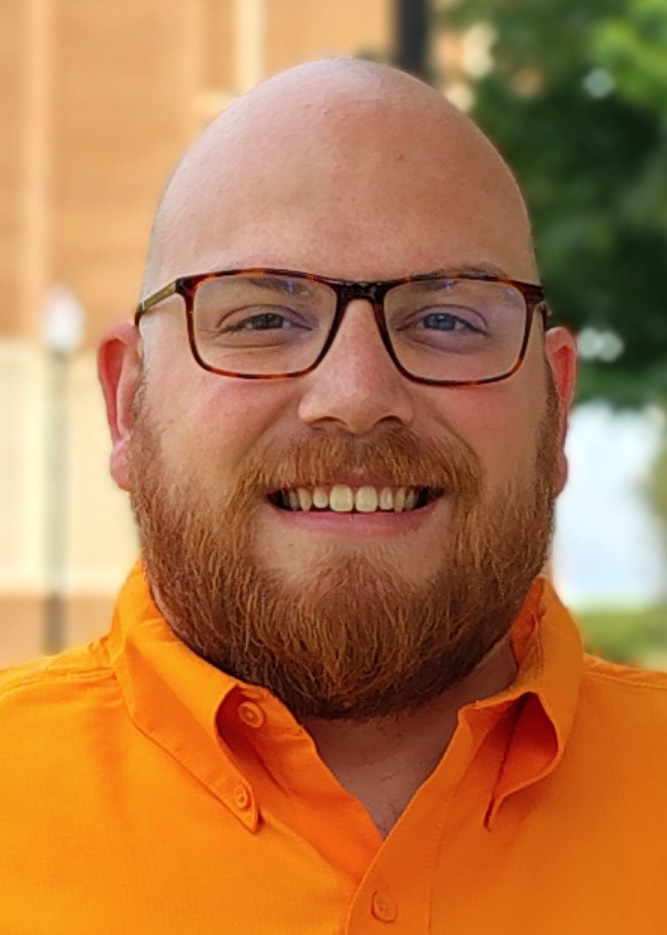
Assistant Professor - Accepting PHD Students
Biography
Alexander "AJ" Wray, MA, PHD is a health geographer that examines the how the design and planning of communities affects youth populations. The primary focus of his research is further developing and applying geographic ecological momentary assessment and digital methodologies to community health challenges. A secondary focus of his research is on the role of temporality as it relates to health and behavioral outcomes in the traditions of more-than-representational theory and ecological systems theory. Presently, Dr. Wray is supporting the development of a physical activity-based park prescription intervention trial for (pre-)diabetic patients in London, Mississauga, Montreal, and Toronto, Canada. He is also involved in studies of youth experiences of public space in high-rise cities, the daily travel patterns of caregivers, and the creation of a Student Housing Observatory for Ontario and Quebec in Canada. Over the past six years, he has led multiple research and consulting projects for federal, provincial, and local government organizations including ParkSeek and the Food Retail Environment Study for Health and Economic Resiliency (FRESHER). Dr. Wray was trained as a professional urban planner, with an Honors Bachelor of Environmental Studies in Planning (Co-op) and Diploma in Environmental Assessment from the University of Waterloo (2018), a Master of Arts in Geography from The University of Western Ontario (2020), and a Doctorate in Geography & Environment from The University of Western Ontario (2025). In 2023, Dr. Wray's work was internationally recognized as a World Urban Parks' Emerging Urban Leaders Fellow of the Salzburg Global Seminar. His research can be found in journals across the health and social sciences, including Urban Studies, Health & Place, Housing Policy Debate, the Canadian Journal of Public Health, Cities & Health, and Cancer. He is Member of the International Science Council's Global Roster of Experts, a Board Member of the International Town and Gown Association, and the Past President of the Town and Gown Association of Ontario.
Research
- 2025-2028: Student Housing Observatory – Ontario and Quebec (Social Sciences and Humanities Research Council of Canada Partnership Development Grants) (PI: N Revington, Institut national de la recherche scientifique)
- 2025-2027: Mobilities of care: A community-informed approach to understanding the unique travel needs of caregivers (Social Sciences and Humanities Research Council of Canada Insight Development Grants) (PI: L Smith, University of Toronto)
- 2025-2026: City Sprints for Climate Justice: Increasing youth engagement in climate-sensitive urban design research and action (Canadian Institutes of Health Research Catalyst Grant: Community Based Research in Climate Change Priority Areas) (PI: L Minaker, University of Waterloo)
- 2024-2030: Development and Implementation of a Parks Prescription Intervention for Diabetes Prevention [PARKS-DPRX] (Canadian Institutes of Health Research & Public Health Agency of Canada Implementation Science Team Grants) (PI: G Booth, University of Toronto)
- 2023-2024: Healthy Youth in High-Rises (Canadian Institutes of Health Research Catalyst Grant: Healthy Youth Priority Areas) (PI: L Minaker, University of Waterloo)
- 2022-2023: Encouraging restorative mental health practices among university students with a geographic ecological momentary assessment tool (The University of Western Ontario Bell-Western 5G Research Fund) (PI: J Gilliland, The University of Western Ontario)
- 2022-2023: Understanding the access and quality dimensions of parks and recreation in Canada’s North [ParkSeek] (Polar Knowledge Canada Northern Scientific Training Program)
- 2021-2024: Linking young Canadians to parks and recreational resources using geo-targeted messaging in a smartphone application [ParkSeek] (Social Sciences and Humanities Research Council of Canada Sport Participation Research Initiative Doctoral Research Award)
Education
- 2018: Bachelor of Environmental Studies (Honours) in Planning (Co-op), University of Waterloo, Canada
- 2020: Master of Arts in Geography, The University of Western Ontario, Canada
- 2025: Doctor of Philosophy in Geography & Environment, The University of Western Ontario, Canada
Professional Service
- Board Member, International Town and Gown Association, 2023 to present
- Member, Global Roster of Experts of the International Science Council, 2024 to present
Awards and Recognitions
- World Urban Parks’ Emerging Urban Leaders Fellow of the Salzburg Global Seminar, 2023-2024
- Canada Graduate Scholarship Doctoral, Social Sciences and Humanities Research Council of Canada, 2021-2024
- Geographies of Health and Healthcare Study Group Travel Award, Canadian Association of Geographers, 2022
- Children’s Health Research Institute Travel Award, Lawson Foundation, 2020
- Institute of Population and Public Health and Canadian Public Health Association Conference Travel Award, Canadian Institutes of Health Research, 2020
- Esri Canada Geographic Information Systems Scholarship, The University of Western Ontario, 2019
- G. Pleva Prize for Excellence as a Graduate Teaching Assistant, Department of Geography, The University of Western Ontario, 2019
- Ontario Graduate Scholarship, Ontario Ministry of Training, Colleges and Universities, 2019-2021
- Joseph-Armand Bombardier Canada Graduate Scholarship Masters, Social Sciences and Humanities Research Council of Canada, 2018-2019
- Federation of Students Leadership Award, University of Waterloo, 2018
- Jim Kalbfleisch Award, University of Waterloo, 2017
- Alyson Woloshyn Leadership Award, University of Waterloo, 2016
- Southwestern Ontario District Scholarship, Ontario Professional Planners Institute, 2014
- University of Waterloo Planning Alumni of Toronto Scholarship, University of Waterloo, 2013
- Colonel McLaughlin Graduate Scholarship, Durham District School Board, 2013
Publications
- Wray A, Martin G, Seabrook J, Doherty S, & Gilliland J. 2025. Does outdoor advertising correlate with retail food purchases made by adolescents? A cross-sectional study in Canada. Health Promotion International 40(2): daaf016. DOI: 10.1093/heapro/daaf016
- Buttazzoni A, Smith L, Lo R, Wray A, Gilliland J, & Minaker L. 2025. Urbanization, housing, and inclusive design for all? A community-based participatory research investigation of the health implications of high-rise environments for adolescents. Cities 160: e105809. DOI: 10.1016/j.cities.2025.105809
- Buttazzoni A, Smith L, Lo R, Wray A, Gilliland J, & Minaker L. 2025. “I like seeing people, different cultures, and hearing different music”: Exploring adolescent perspectives of inclusive and healthy high-rise and dense urban environment designs. Landscape and Urban Planning 254: e105252. DOI: 10.1016/j.landurbplan.2024.105252
- Wray A, Arku G, Long J, Minaker L, Seabrook J, Doherty S, & Gilliland J. 2025. An investigation of operational and land use predictors for restaurant survival during the COVID-19 pandemic. Urban Studies 62(5): 909-931. DOI: 10.1177/00420980241269785
- Andrews G, Gorman R, Asker C, & Wray A. In press. Non-representational theory in health research: positions and positions. Forthcoming chapter in P Vannini (ed.), Non-representational and more-than-human research: Vitalist methodologies for the end of data. Routledge.
- Wray A. In press. Tracing the liveliness of daily data with geographic ecological momentary assessment and mobile technology. Forthcoming chapter in P Vannini (ed.), Non-representational and more-than-human research: Vitalist methodologies for the end of data. Routledge.
- Wijesundera J, Ball G, Wray A, Gilliland J, Savu A, Dover D, Haqq A, & Kaul P. 2024. Relationships between measures of the physical activity-related built environment and excess weight in preschoolers: A retrospective population-level cohort study. Childhood Obesity 20(7): 526-535. DOI: 10.1089/chi.2024.0211
- Revington N, & Wray A. 2024. Studentification and student wellbeing in the private rented sector: Further reflections on Lynch et al. Perspectives in Public Health 144(1): 18-20. DOI: 10.1177/17579139231202865
- Wray A, Martin G, Nelson Ferguson K, Coen S, Seabrook J, & Gilliland J. 2024. Neighbourhood environmental influences on youth mental wellbeing during the first summer of the COVID-19 pandemic. Cities & Health 8(2): 143-154. DOI: 10.1080/23748834.2023.2282850
- Revington N, & Wray A. 2024. Land-use planning approaches to near-campus neighbourhoods and student housing development patterns in Ontario, Canada. Housing Policy Debate 34(5): 668-694. DOI: 10.1080/10511482.2022.2093939
- Overvelde A, McEachern L, Wray A, & Gilliland J. 2023. The Workplace as a Therapeutic Landscape: Understanding the effects of COVID-19 on the wellbeing of food hospitality employees. SSM – Qualitative Research in Health: e100334. DOI: 10.1016/j.ssmqr.2023.100334
- Wray A, Martin G, Doherty S, & Gilliland J. 2023. Analyzing differences between spatial exposure estimation methods: A case study of outdoor food and beverage advertising in London, Canada. Health & Place 79: e102641. DOI: 10.1016/j.healthplace.2021.102641
- Everitt H, van der Werf P, Seabrook J, Wray A, Gilliland J. 2022. The quantity and composition of household food waste during the COVID-19 pandemic: A direct measurement study in Canada. Socio-Economic Planning Sciences 82: e101110. DOI: 10.1016/j.seps.2021.101110
- Martin G, Bowman D, Graat M, Clark A, Wray A, Askwith Z, Seabrook J, & Gilliland J. 2021. Examining how changes in provincial policy on vape marketing impacted the distribution of vaping advertisements near secondary schools in London, Ontario. Canadian Journal of Public Health 112(3): 440-448. DOI: 10.17269/s41997-020-00453-9
- Boamah A, Gilliland J, Wray A, & Sibbald S. 2021. CASE 3: Melcom and the COVID-19 Pandemic: Working Toward a Resilient Food Business Industry. Western Public Health Casebooks (vol. 8). London: The University of Western Ontario.
- Wray A, Fleming J, & Gilliland J. 2020. The public realm during public health emergencies: Exploring local level responses to the COVID-19 pandemic. Cities & Health 5(s1): S216-S219. DOI: 10.1080/23748834.2020.1790260
- Wray A, Martin G, Ostermeier E, Medeiros A, Little M, Reilly K, & Gilliland J. 2020. Physical activity and social connectedness interventions in outdoor spaces among children and youth: A rapid review. Health Promotion and Chronic Disease Prevention in Canada 40(4): 104-115. DOI: 10.24095/hpcdp.40.4.02
- Ziegler B, Wray A, & Luginaah I. 2019. The ever-changing narrative: Supervised injection site policy making in Ontario, Canada. International Journal of Drug Policy 74: 98-111. DOI: 10.1016/j.drugpo.2019.09.006
- Dean J, Wray A, Braun L, Casello J, McCallum L, & Gower S. 2019. Holding the keys to health? A scoping study of the population health impacts of automated vehicles. BMC Public Health 19(1258): 1-10. DOI: 10.1186/s12889-019-7580-9
- Wray A, & Minaker L. 2019. Is cancer prevention influenced by the built environment? A multidisciplinary scoping review. Cancer 125(19): 3299-3311. DOI: 10.1002/cncr.32376
- Wray A, Olstad D, & Minaker L. 2018. Smart prevention: A new approach to primary and secondary cancer prevention in smart and connected communities. Cities 79: 53-69. DOI: 10.1016/j.cities.2018.02.022
- Sinasac S, & Wray A. 2017. Autonomous vehicles: Saviour or sentinel of low carbon suburban futures (pp 134-137) and various graphical elements throughout. In M Moos & R Walter-Joseph (eds), Still Detached and Subdivided? Suburban Ways of Living in 21st Century North America. Berlin: Jovis Verlag GmbH.