
The Master’s in Education, Adult and Continuing Education Program is offered online via distance learning. Our faculty deliver courses using a synchronous format, so you will need to be online with the instructor and other students at the designated evening time, currently Eastern Standard Time, though some courses may be offered asynchronously. Faculty in the Department of Educational Leadership & Policy Studies are dedicated to developing and examining environments that improve learning opportunities and support lifelong learning for individuals of all ages, abilities, and backgrounds. The degree requires 36 hours of non-thesis coursework and a comprehensive exam. Students must complete 24 hours of core courses and 12 hours in Adult Education. This online program’s curriculum has specific requirements, such as enrolling in two courses per semester, including summer sessions, to help you graduate within six semesters. If you can only take one course each semester, graduation will be delayed. Additionally, students enrolled in online degree programs may not register for campus-based courses, regardless of their location or employment.
Application Requirements
Application materials include:
- Resume
- Statement of Goals
- Personal Statement
- Writing Sample
- Three Recommendations
Admission Requirements:
- Bachelor’s degree
- Minimum 2.7 Cumulative GPA
- Resume
- Letter of Introduction
- Statement of Goals
- Writing Sample
- Three Rating Forms
- Applicants must submit an online graduate application to the Office of Graduate Admissions.
Deadlines for Submission of Application Materials
- Fall Semester: June 1st
- Spring Semester: October 1st
- Summer Semester: February 1st
For more information, please contact Dr. Qi Sun, the Program Coordinator.
Application Guidelines
Guidelines for the submission of application materials for the online Masters of Science in Education with a Concentration in Adult and Continuing Education Include:
- Curriculum Vitae (CV): This document should present detailed information about your professional and academic experiences, along with notable achievements, awards, and volunteer work.
- Cover Letter / Letter of Introduction: The cover letter is a chance for us to learn more about you. It should expand on your CV, showcase your skills, and describe your goals for pursuing the program you are applying to in adult and continuing education.
- Goals Statement: Please share with us your research interests and how this degree will help you achieve goals in your learning, career development, and life enrichment; how you plan to use your prior life and work experiences, knowledge, and skills in your new learning; and how you intend to complete the degree.
- Transcripts: Upload your degree transcripts. Visit the Transcripts page or contact Graduate Admissions at (865) 974-3251 for assistance with this process.
- Writing Sample: Choose a copy of your previous thesis for a graduate degree, a course paper for a degree program, a published article, a conference paper, or another type of writing that you believe showcases your professional writing skills and style.
Program Faculty

Patricia Higgins, PhD
Clinical Assistant Professor
[email protected]
865-974-8642
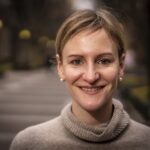
Jennifer D’haem Kobrin, PhD
Assistant Professor
[email protected]
865-974-8642

Mitsunori Misawa, PhD
Associate Professor
[email protected]
865-974-5440

Qi Sun, EdD
Professor & Program Coordinator
[email protected]
865-974-5403
Financial Aid Information
Includes ELPS GA Application form, departmental fellowships/scholarships, and links to other funding sources around UT Knoxville.
Testimonials
“Discard all of your preconceived notions of online classes because these are designed to allow for the benefits of sitting in an actual classroom with your colleagues and professors while in any variety of settings.”
– Linda Gehron (alumna)
“I am honored to have been accepted by and graduated from a program as engaging and prestigious as the ELPS EdPsych Online Master’s program. It has graced me with lifelong connections and knowledge that I will forever cherish, both personally and professionally.” – Anthony L. Capers Jr. (alumnus)
“The challenge in producing and addressing the theoretical assignments in a scholarly way has made me a better writer and thinker. I look at the world differently now. It has opened up another world of information that is very exciting and applicable in many ways.” – Sue Culpepper (alumna)
“With a deeper understanding of the research in this field, I have also been able to better interpret new public notions and policies and feel confident in my ability judge their potential effectiveness. In a professional setting, I now feel regarded as informed and reliable when it comes to finding new strategies and improving current practices.” – Jessica Nelson (alumna)