Superintendent Job-Seeking Behaviors: Types of Positions Sought and Reasons for Seeking.
September 12, 2023
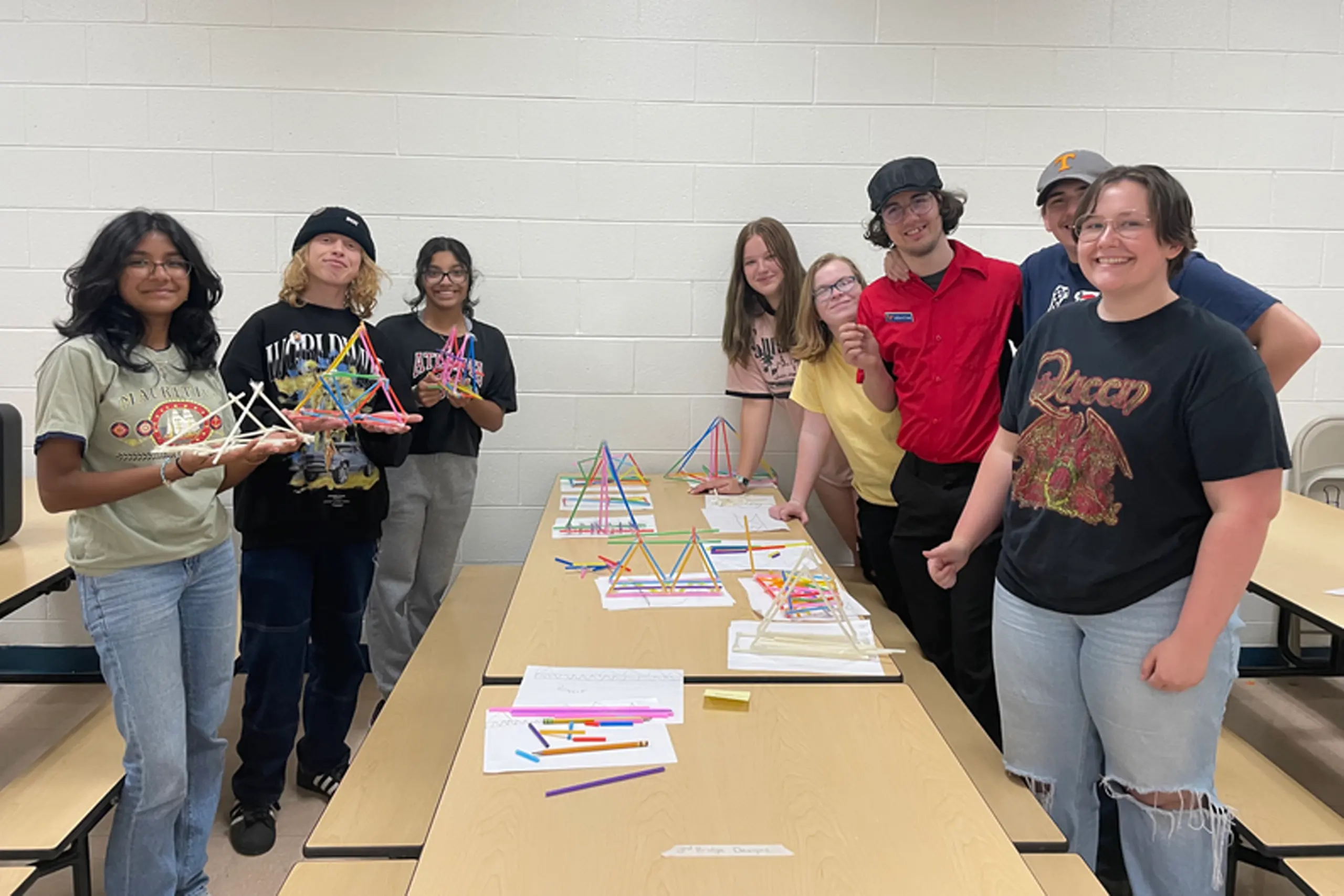
Math and Science Upward Bound students provided community service outreach to Andersonville Elementary School and led a STEM Bridge Building challenge for their summer school participants.
Research by Dr. Joshua M. Rosenberg
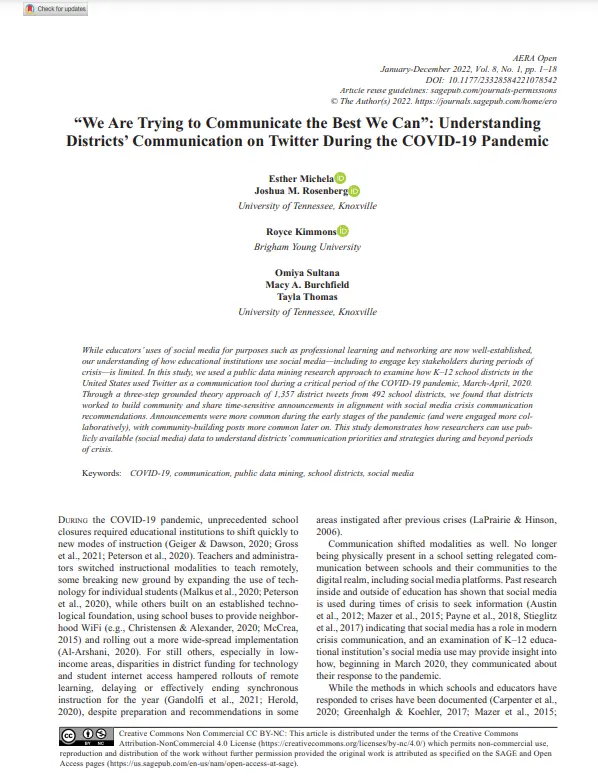
Michela, E., Rosenberg, J. M., Kimmons, R., Sultana, O., Burchfield, M. A., & Thomas, T. (2022). “We Are Trying to Communicate the Best We Can”: Understanding Districts’ Communication on Twitter During the COVID-19 Pandemic. AERA Open, 8. https://journals.sagepub.com/doi/full/10.1177/23328584221078542
Educational institutions had to swiftly adapt their instructional methods due to closures caused by various circumstances. Teachers and administrators transitioned to remote teaching, with some embracing technology for individual students and others building upon existing technological foundations. In certain cases, funding disparities in low-income areas hindered effective implementation of remote learning, even though previous crises had prompted preparation and recommendations. Communication also shifted, as the absence of physical school presence led to increased reliance on digital communication methods, including social media platforms. Social media’s role in crisis communication has been recognized through past research, suggesting its importance during times of uncertainty. Analyzing how K-12 educational institutions used social media during the pandemic could offer insights into their communication strategies. The methods used by schools in responding to these challenges varied and were influenced byfactors such as technology availability, funding, and communication choices. This paper discusses how districts can communicate effectively during crises.
Research by Dr. Joshua M. Rosenberg
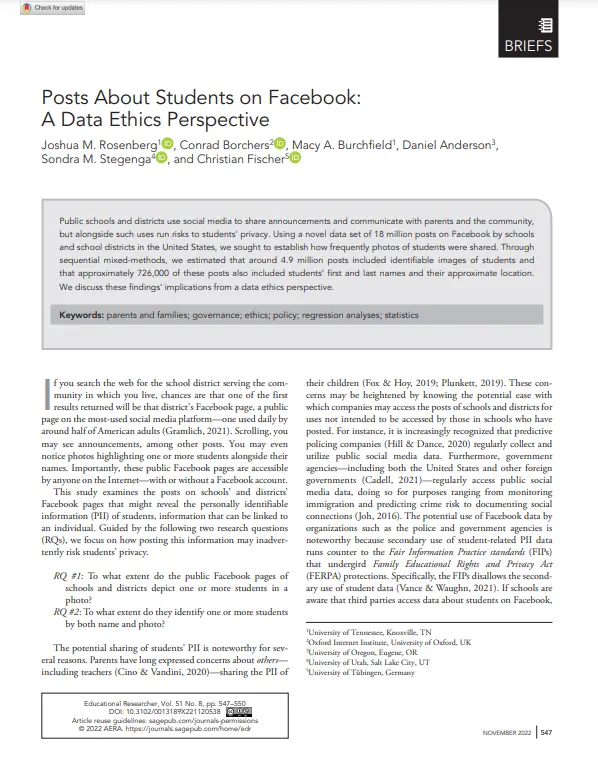
Rosenberg, J. M., Borchers, C., Burchfield, M. A., Anderson, D., Stegenga, S. M., & Fischer, C. (2022).
Posts about students on Facebook: a data ethics perspective.
Educational researcher, 51(8), 547-550. https://journals.sagepub.com/doi/full/10.3102/0013189X221120538
This study examines the public Facebook pages of schools and districts, which are often among the top search results for community school districts. These pages, accessible to anyone on the Internet, frequently contain posts including photos of students and sometimes even their names. The research aims to address the potential privacy risks associated with sharing personally identifiable information (PII) of students on these pages.Sharing students’ PII is concerning due to parental worries about the privacy of their children’s information beingshared without consent. This concern is exacerbated by the possibility that third-party entities, including companies and government agencies, might access and use this data. Predictive policing companies and government agencies regularly gather public social media data, potentially infringing on student privacy. This is significant as it goes against the Fair
Information Practice standards (FIPs) that uphold protections under the Family Educational Rights and Privacy Act (FERPA). These standards prohibit the secondary use of student data. The study seeks to shed light on the potential implications and awareness of schools regarding third-party access to student data on Facebook.